
Medaka Egg Care Guide: How to Hatch and House Medaka Eggs
It All Begins Here
Hatching Medaka eggs
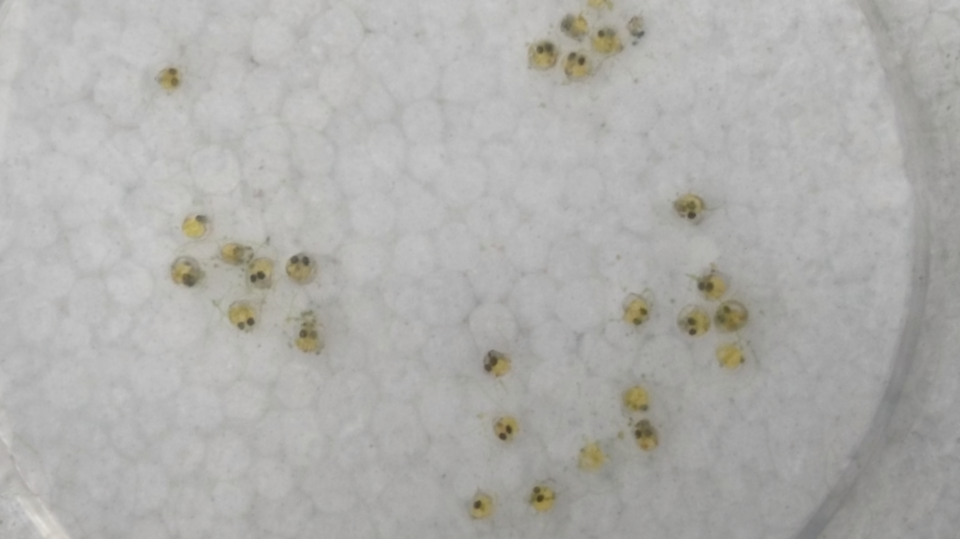
Hatching medaka eggs is a rewarding and relatively simple process because the eggs are remarkably hardy. When you receive your eggs, keep in mind that they will be at least 5 days old, meaning they have already completed a significant portion of their development, you may even be able to see tiny eyes and heartbeats forming inside the clear shells.
Best Containers for Housing Medaka Eggs
When choosing how to house your eggs, we recommend using a container or Tupperware of around 2 litres. This size is large enough to maintain stable water parameters while still allowing you to closely observe the eggs. When choosing a container, ensure it is made of food-grade material. plastics labelled 2, 4, or 5 are considered safe for fish and eggs, Additionally, keep the water level around 3 inches. This will ensures the eggs stay well-oxygenated.
Tap Water vs. Aquarium Water for Medaka Eggs
While you can certainly use aquarium water from an established tank, you must be careful not to accidentally introduce small snails or other micro-predators, as they can quickly consume eggs. If you do choose to use aquarium water, we advise running it through a fine net to filter out any hidden pests. However, for the best results, we recommend using fresh tap water until the eggs hatch. Tap water is more sterile, and its trace chlorine content serves as a beneficial anti-fungal agent that protects the eggs throughout the incubation period.
Ideal Incubation Temperature for Medaka Eggs
To ensure a healthy hatch, maintain a water temperature between 20°C and 25°C. Staying within this range is important, dropping below 20°C will slow down development, while rising above 25°C can encourage fungal growth and heightens the risk of the fry hatching with deformities.
How to Maintain Stable Temperatures: The Floating Method
The most reliable ways to maintain a steady temperature for medaka eggs and fry is to use the Floating Method. If you have an aquarium with a heater, simply float your incubation container inside the tank. If you do not have an aquarium, you can set up a container with a heater to achieve the same effect.
Advised
Turn aquarium lights down if possible; if this is not possible, turn them off or use them at a minimum and rely on natural light. Opening the lid to your aquarium for part of the day will provide the light they need without the risks.
Do not cover the incubation container, A lid can cause the temperature to rise too high. Additionally allowing gas exchange helps maintain better water quality.
How to Change Water and Maintain Quality for Medaka Eggs
To keep your Medaka eggs healthy during incubation, regular water changes are recommended changing one-third of the water every 2 days. Use fresh tap water and ensure you allow it to reach roughly the same temperature as the incubation container before adding.
Watch for signs such as a cloudy appearance or oily film on the surface. If you notice these signs, perform a 50-80 percent water change. Alternatively, you can use the included pipette to carefully move the eggs into a new, fresh incubation container—just ensure the water temperature in the new container is the same.
How to Tell if Medaka Eggs Have Fungus
Healthy eggs will remain clear and firm, If an egg is infected with fungus, it will appear "fuzzy" or develop a white, hair-like growth around it. This fungus can quickly spread and "bridge" over to healthy eggs, inspecting daily and spotting early considerably lowers the risk of fungus spreading
What to do if Medaka Egg Develops Fungus
If an egg is infected, use your pipette to carefully remove and either isolate or discard depending on severity, heavily affected egg can sometimes be saved with the use of Methylene Blue. If the infected egg is attached to a healthy egg, gently separate with your hands. Increasing the frequency of your water changes with fresh tap water during this time will help keep the fungal growth to a minimum.